
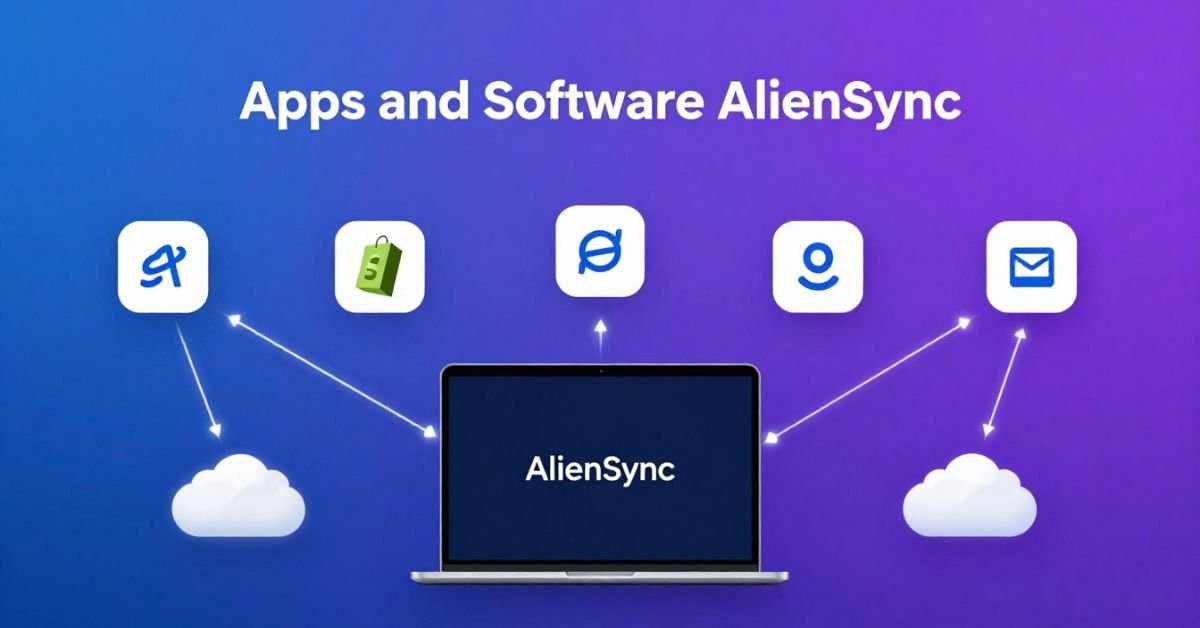
Every business uses multiple tools. Your team might use Shopify for sales, Google Sheets for tracking, Slack for communication, and QuickBooks for accounting. But these tools don’t talk to each other naturally.
That creates problems. You waste time copying data manually. Information gets outdated. Mistakes happen. Your team works harder instead of smarter.
AlienSync is a platform designed to solve this exact problem. It connects different apps and software, syncing data automatically so your tools work together smoothly. Instead of copying customer details from one platform to another, AlienSync does it for you—instantly and accurately.
In this guide, you’ll learn what apps and softwares AlienSync supports, how the platform works, who benefits most, and whether it’s the right fit for your needs.
Quick Summary
AlienSync is a data synchronization platform that connects business apps and automates data flow between them. It helps companies eliminate manual data entry, reduce errors, and keep information updated across multiple tools in real time.
What Is AlienSync?
AlienSync is a cloud-based integration platform that connects your business software and keeps data synchronized across different applications.
Think of it as a bridge between your tools. When you update a customer’s email in your CRM, AlienSync can automatically update that same email in your email marketing tool, accounting software, and support desk—without you touching anything.
The platform focuses on automation. Instead of building complex code or hiring developers, you set up workflows using a visual interface. You choose which apps to connect, what data to sync, and when it should happen.
Why Businesses Use Apps and Softwares AlienSync
1. Eliminate Manual Data Entry
Copying information between platforms wastes hours every week. With AlienSync, data moves automatically.
Example: An online store owner uses Shopify for sales and Xero for accounting. Every order used to require manual entry into Xero. Now AlienSync syncs order details instantly—saving 10+ hours weekly.
2. Keep Data Accurate and Updated
When you update information in one place, AlienSync updates it everywhere. No more outdated spreadsheets or conflicting customer records.
3. Connect Tools Without Coding
Most integration platforms require technical knowledge. AlienSync uses simple drag-and-drop workflows that non-technical users can set up.
4. Save Money on Custom Development
Building custom integrations costs thousands of dollars. AlienSync offers pre-built connections for popular business apps at a fraction of the cost.
Key Features of AlienSync Software
Real-Time Data Synchronization
Changes made in one app appear in connected apps within seconds. This keeps your entire team working with current information.
Two-Way Sync Capability
Unlike one-way integrations, AlienSync can sync data in both directions. Update information in either app, and both stay current.
Custom Field Mapping
You decide which data fields sync between apps. Match your CRM’s “company name” field with your invoicing tool’s “client name” field—AlienSync handles the rest.
Automated Workflows
Set up triggers and actions. When something happens in one app (like a new customer), AlienSync automatically performs actions in other apps (like creating a contact in your email tool).
Error Monitoring and Alerts
If a sync fails, you get notified immediately. The dashboard shows exactly what went wrong and where.
Data Transformation Tools
Sometimes data formats don’t match. AlienSync can transform data—like converting dates, splitting names, or combining fields—before syncing.
Popular Apps and Softwares AlienSync Connects
AlienSync integrates with hundreds of business applications across different categories:
E-commerce Platforms:
- Shopify
- WooCommerce
- BigCommerce
- Magento
CRM Systems:
- Salesforce
- HubSpot
- Zoho CRM
- Pipedrive
Accounting Software:
- QuickBooks
- Xero
- FreshBooks
- Wave
Marketing Tools:
- Mailchimp
- Constant Contact
- ActiveCampaign
- SendGrid
Project Management:
- Asana
- Trello
- Monday.com
- ClickUp
Communication Platforms:
- Slack
- Microsoft Teams
- Discord
Spreadsheets and Databases:
- Google Sheets
- Airtable
- Microsoft Excel
- MySQL databases
How AlienSync Works: Step-by-Step
Step 1: Connect Your Apps
Log into AlienSync and authorize the apps you want to connect. This typically involves signing into each platform and granting permission.
Step 2: Choose Your Sync Direction
Decide if you want one-way sync (data flows from App A to App B) or two-way sync (data flows both directions).
Step 3: Map Your Fields
Match the data fields between apps. For example, connect your CRM’s “phone number” field to your support tool’s “contact phone” field.
Step 4: Set Up Triggers and Filters
Choose what triggers the sync. Options include:
- New record created
- Record updated
- Specific field changed
- Scheduled intervals (every hour, daily, etc.)
Add filters if needed. For example, only sync customers from a specific region or orders above a certain amount.
Step 5: Test and Activate
Run a test sync with sample data to make sure everything works correctly. Once confirmed, activate the workflow.
Step 6: Monitor Performance
Check the dashboard regularly to see sync statistics, identify errors, and review what data moved between apps.
Real-World Use Cases
E-commerce Business
An online clothing store uses Shopify for sales, Mailchimp for email marketing, and QuickBooks for accounting.
Without AlienSync: Staff manually exports customer data from Shopify, imports it into Mailchimp for newsletters, and enters order details into QuickBooks.
With AlienSync: New customers automatically sync to Mailchimp. Purchase data flows to QuickBooks instantly. The team saves 15 hours weekly and eliminates data entry errors.
Marketing Agency
A digital marketing agency manages client campaigns across HubSpot, Google Sheets, and Slack.
Without AlienSync: Account managers copy campaign results from HubSpot to Google Sheets for client reports. They manually notify the team in Slack about important updates.
With AlienSync: Campaign metrics sync to Google Sheets automatically. When a lead reaches a certain score, Slack alerts the team. Reporting time drops by 60%.
SaaS Company
A software company uses Salesforce for sales, Zendesk for support, and Stripe for payments.
Without AlienSync: Support teams don’t see subscription details. Sales teams can’t track support tickets. Information lives in silos.
With AlienSync: Customer payment status from Stripe syncs to Salesforce and Zendesk. Support agents see billing history. Sales reps see support issues. Customer experience improves dramatically.
AlienSync vs. Other Integration Platforms
| Feature | AlienSync | Zapier | Make (Integromat) |
|---|---|---|---|
| Two-way sync | Yes | Limited | Yes |
| Real-time updates | Yes | Mostly (depends on plan) | Yes |
| Ease of use | High | Very High | Moderate |
| Pricing | Competitive | Higher for advanced features | Moderate |
| Custom field mapping | Yes | Limited | Yes |
| Best for | Data-heavy businesses | Simple automations | Complex workflows |
AlienSync specializes in deep data synchronization, while competitors like Zapier focus more on simple task automation. If you need robust two-way data sync with custom field mapping, AlienSync offers better capabilities at similar or lower prices.
Who Should Use AlienSync?
Best For:
- E-commerce businesses managing multiple sales channels
- Agencies handling client data across various tools
- SaaS companies needing customer data in multiple platforms
- Growing businesses replacing manual processes with automation
- Teams without dedicated developers
Not Ideal For:
- Very small businesses with simple needs (free tools might suffice)
- Companies requiring highly complex, custom-built integrations
- Enterprises needing on-premise solutions only
Pricing Considerations
AlienSync typically offers tiered pricing based on:
- Number of apps connected
- Volume of data synced monthly
- Number of active workflows
- Team members using the platform
Most plans start around $29-49/month for small businesses and scale up for larger operations. Many platforms offer free trials, letting you test functionality before committing.
Compare the monthly subscription cost against the hours your team currently spends on manual data entry. If you’re spending 10+ hours monthly copying data, the investment usually pays for itself quickly.
Setting Up AlienSync Successfully
Start Small
Don’t try connecting all your apps at once. Begin with your two most important tools and one simple workflow.
Document Your Workflows
Write down what data you’re syncing and why. This helps troubleshoot issues later and trains new team members.
Monitor the First Week Closely
Check syncs daily during the first week. Catch any mapping errors or data mismatches early.
Set Up Error Notifications
Configure email or Slack alerts when syncs fail. Quick responses prevent data gaps.
Review Regularly
Check your workflows monthly. Remove unused connections and optimize frequently-used syncs.
Common Challenges and Solutions
Challenge: Data formats don’t match between apps.
Solution: Use AlienSync’s data transformation features to reformat information before syncing.
Challenge: Too much data syncing slows down the process.
Solution: Add filters to sync only relevant information—like customers from specific regions or orders above certain amounts.
Challenge: Team members don’t understand which data syncs where.
Solution: Create a simple visual map showing all connections and share it with your team.
Challenge: Duplicate records appear in some apps.
Solution: Configure deduplication rules and use unique identifiers like email addresses or customer IDs.
Security and Data Privacy
When using apps and softwares AlienSync connects, data security matters. Look for these features:
- Encryption: Data should be encrypted during transfer and storage
- Compliance: Check for GDPR, CCPA, and SOC 2 compliance
- Access controls: Limit which team members can create or modify workflows
- Audit logs: Track who made changes and when
- Data retention policies: Understand how long sync logs are stored
Always review the platform’s security documentation and ensure it meets your industry requirements.
Conclusion
Apps and softwares AlienSync connects represent the modern business technology stack—specialized tools that each do one thing extremely well. But without synchronization, these tools create information silos.
AlienSync bridges those gaps. It transforms disconnected applications into an integrated system where data flows smoothly and automatically.
If your team spends significant time copying information between platforms, dealing with outdated data, or fixing errors from manual entry, a synchronization platform makes practical sense. The time savings alone often justify the investment within the first month.
Start by identifying your two most-used apps that don’t currently talk to each other. Set up one simple sync workflow. Monitor the results for a week. You’ll quickly see whether automated data synchronization delivers value for your specific situation.
Ready to eliminate manual data entry and keep your tools in sync? Explore how WriteXBlog can help you document your automation workflows and share knowledge with your team. Write. Share. Grow.
Frequently Asked Questions
What is AlienSync used for?
AlienSync is used to automatically synchronize data between different business applications. It eliminates manual data entry by connecting your CRM, e-commerce platform, accounting software, and other tools, keeping information consistent and updated across all systems without human intervention.
Can AlienSync handle two-way data synchronization?
Yes, AlienSync supports bidirectional data sync between connected applications. When you update information in either app, the changes automatically reflect in both systems. This ensures data consistency regardless of where your team makes updates.
Do I need coding skills to use AlienSync?
No, AlienSync is designed for non-technical users with a visual, drag-and-drop interface. You select the apps to connect, map data fields by clicking, and set up workflows without writing code.
How much does AlienSync cost?
AlienSync pricing typically ranges from $29 to $299+ per month depending on factors like number of connected apps, monthly sync volume, and active workflows. Most providers offer tiered plans for small businesses, growing companies, and enterprises.
Is my data safe with AlienSync?
Reputable sync platforms like AlienSync use industry-standard security measures including data encryption, secure API connections, and compliance with regulations like GDPR and SOC 2. Your data transfers through encrypted channels and isn’t stored longer than necessary for sync operations.
About the Author