
Understanding RBLWAL: A Clear Guide to This Technology Concept
Technology keeps introducing new terms that sound complex but solve real problems. If you’ve come across RBLWAL and felt confused, you’re not alone.
Most technical documentation throws around abbreviations without explaining what they actually mean or why they matter to everyday users and businesses.
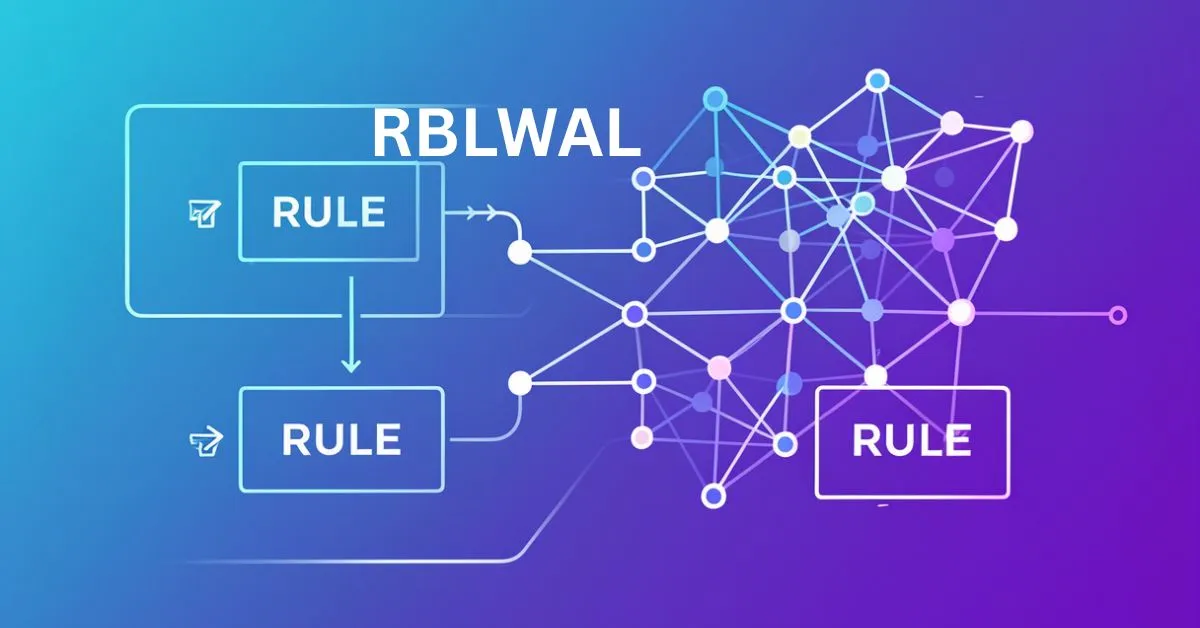
RBLWAL stands for Rule-Based Logic with Adaptive Learning – a technology approach that combines predefined rules with systems that learn and improve over time. Think of it as giving computers a rulebook to follow while also letting them get smarter from experience. This matters because it helps software make better decisions without constant human input, saving time and reducing errors in everything from customer service chatbots to security systems.
In this guide, you’ll learn what RBLWAL actually is, how it works in simple terms, where companies use it today, and whether it’s something your business should care about.
Quick Summary
RBLWAL combines fixed rules with learning capabilities. It’s used in automated systems that need to follow guidelines while improving performance. Most common in customer service automation, security monitoring, and process optimization. Benefits include consistency with flexibility, but requires initial setup effort.
What Makes RBLWAL Different From Other Tech Approaches
Traditional rule-based systems follow strict instructions. If A happens, do B. Always. No exceptions.
Machine learning systems, on the other hand, learn patterns from data without explicit rules. They adapt but can be unpredictable.
RBLWAL sits in the middle. It starts with clear rules that humans define, then adds a layer that watches outcomes and adjusts how those rules get applied.
Imagine a customer service system. A pure rule-based approach might say: “If customer mentions ‘refund,’ transfer to billing department.” Simple, but rigid.
A pure machine learning approach might analyze thousands of conversations and guess the best department. Flexible, but sometimes wrong in unpredictable ways.
RBLWAL would start with the transfer rule but track whether customers seemed satisfied with that outcome. Over time, it might learn that refund requests about digital products should go to tech support instead, based on actual resolution patterns.
The system keeps the safety of rules but gains the intelligence of learning.
How RBLWAL Actually Works
The process breaks down into four main parts:
Rule Foundation
Developers create a base set of rules. These come from business logic, regulations, or best practices. For a fraud detection system, a rule might be: “Flag transactions over $5,000 from new accounts.”
Action and Monitoring
The system applies these rules to real situations and tracks what happens. Did flagging that transaction prevent fraud? Did it annoy a legitimate customer?
Pattern Recognition
The adaptive learning component identifies patterns in the outcomes. Maybe transactions between $5,000 and $7,500 from accounts 30-60 days old rarely turn out fraudulent.
Adjustment
The system tweaks how it applies rules. It might still flag the transaction but with lower priority, or it might add contextual factors before flagging.
Crucially, it doesn’t delete the original rule. It refines how and when that rule gets triggered.
Real-World Applications You Interact With Daily
Many services you use probably employ RBLWAL-style approaches, even if they don’t call it that.
Email Filtering
Gmail and Outlook start with rules about known spam patterns. Then they learn from your behavior. When you mark something as “not spam,” the system adapts how it treats similar messages for you specifically.
Content Moderation
Social media platforms have clear rules about prohibited content. But the systems that enforce those rules learn to recognize new variations of violations based on moderator decisions and user reports.
Banking Security
Your bank knows certain transactions are risky by policy. The system also learns your spending patterns. A $200 charge at a hardware store might be fine for you but suspicious for someone who never shops there.
Smart Home Devices
Thermostats like Nest start with energy-saving rules but learn your schedule and preferences. The rules provide boundaries, learning provides personalization.
Benefits That Make RBLWAL Valuable
Consistency With Intelligence
You get reliable baseline behavior from rules, plus improvement over time from learning. This matters in regulated industries where you can’t just let AI do whatever it wants.
Explainable Decisions
Unlike pure machine learning “black boxes,” RBLWAL systems can usually explain why they did something. “We flagged this because of Rule 7, adjusted by pattern recognition showing similar cases had 73% fraud rate.”
That explainability matters for legal compliance and customer trust.
Lower Data Requirements
Pure machine learning needs huge amounts of training data. RBLWAL starts functional immediately with rules, then improves with whatever data comes in.
Easier Updates
When regulations or business needs change, you update the rules. The learning layer adapts around the new rules without starting from scratch.
Challenges and Limitations to Consider
Initial Setup Complexity
Someone needs to define good rules first. That requires domain expertise and careful thinking about edge cases.
Bad initial rules mean the system starts from a flawed foundation.
Monitoring Requirements
You can’t just set it and forget it. Teams need to watch whether the adaptive learning is actually improving things or drifting in wrong directions.
Potential Rule Conflicts
As the system learns to adjust rule application, conflicts can emerge. Rule A and Rule B might both seem applicable, with the learning component uncertain which should take priority.
Slower Than Pure Solutions
RBLWAL is more complex than simple rule-following or simple machine learning. That complexity can mean slower processing, which matters for real-time applications.
When RBLWAL Makes Sense for Your Business
This approach works best when you have:
Clear Requirements With Room for Optimization
You know the basic logic your system should follow, but you suspect there’s room to get smarter about applying it.
Moderate to High Volume of Interactions
The learning component needs examples to learn from. If you process 10 transactions a month, there’s nothing to learn from. If you process 10,000, patterns emerge.
Need for Transparency
Regulated industries or situations where you might need to justify decisions benefit from the explainability RBLWAL provides.
Resources for Maintenance
You have people who can review system performance and update rules when needed.
A small business with simple, unchanging processes probably doesn’t need this complexity. A mid-size company handling varied customer requests might benefit significantly.
RBLWAL vs. Other Technology Approaches
| Approach | Best For | Main Advantage | Main Drawback |
|---|---|---|---|
| Pure Rule-Based | Unchanging processes, strict compliance needs | Completely predictable, easy to audit | Can’t improve or handle new situations |
| Pure Machine Learning | Pattern recognition with abundant data | Highly adaptive, finds hidden patterns | Hard to explain, needs lots of data |
| RBLWAL | Processes needing reliability AND improvement | Balances consistency with learning | More complex to build and maintain |
| Hybrid AI | Complex decision-making with multiple factors | Maximum flexibility | Highest development cost |
Getting Started With RBLWAL
If you’re considering implementing this approach, start here:
Document Your Current Logic
Write down the rules and decision trees your team currently uses. What triggers what action? When do you make exceptions?
Identify Pain Points
Where do your current rules fail? Where do you wish you had more flexibility? Where do mistakes happen most often?
Start Small
Pick one process to enhance with adaptive learning. Customer inquiry routing, invoice approval, quality control checks – something contained but valuable.
Measure Baseline Performance
Before adding learning capabilities, know how well your rules work now. You need this to measure whether learning actually helps.
Plan Monitoring
Decide what metrics indicate success, how often you’ll review them, and what thresholds trigger human investigation.
Common Mistakes to Avoid
Overcomplicating Initial Rules
Start with clear, simple rules. You can add nuance later. Complex rule sets make it harder to understand what the learning component is doing.
Ignoring User Feedback
The system learns from data, but humans often spot problems first. Build in ways for users to flag issues.
Expecting Magic
RBLWAL won’t fix broken processes. It optimizes existing logic. If your rules are fundamentally flawed, learning just makes those flaws more efficient.
Neglecting Documentation
As the system adapts, document what changes and why. Future team members need to understand the system’s evolution.
The Future of RBLWAL in Technology
This hybrid approach is becoming more common as businesses realize pure AI isn’t always the answer.
Industries with strict regulations – healthcare, finance, legal services – increasingly favor approaches that combine human-defined guardrails with intelligent optimization.
We’re also seeing RBLWAL concepts in:
Process Automation
Robotic Process Automation (RPA) tools adding learning capabilities to scripted workflows.
Cybersecurity
Security systems that enforce policy rules while learning to distinguish real threats from false alarms.
Supply Chain Management
Logistics systems following business rules while optimizing based on real-world delivery patterns and disruptions.
The trend is toward “AI with guardrails” rather than pure autonomous systems.
Conclusion
RBLWAL isn’t a magic solution for every technology challenge. It’s a specific approach that works well for specific situations.
If your processes are simple and unchanging, traditional rule-based systems are probably enough. If you have massive data and tolerance for unpredictability, pure machine learning might work better.
But if you need systems that respect boundaries while getting smarter over time, RBLWAL offers a practical middle path.
The technology landscape keeps evolving. What matters most is choosing approaches that solve your actual problems rather than chasing trends.
RBLWAL represents a growing recognition that the best technology often combines human insight with machine capability, creating systems that are both reliable and intelligent.
Ready to improve your technology knowledge? Explore more practical guides on WriteXBlog, where we break down complex tech topics into clear, actionable insights. Join our community of learners who are growing their expertise one article at a time.
Frequently Asked Questions
What does RBLWAL stand for in technology?
RBLWAL stands for Rule-Based Logic with Adaptive Learning. It combines predefined rules with systems that learn from outcomes, improving decision-making while maintaining compliance with core business logic and providing consistency with flexibility.
Is RBLWAL the same as artificial intelligence?
RBLWAL incorporates AI elements but isn’t pure AI. Traditional AI learns entirely from data, while RBLWAL starts with human-defined rules and uses learning to refine application. Think of it as AI with guardrails for more predictable results.
Do I need programming skills to implement RBLWAL?
Technical expertise helps, but many modern platforms offer low-code interfaces where business users define rules while systems handle learning automatically. Simple applications work with existing tools; complex ones need development resources.
How long does it take to see improvements?
High-volume systems show results within weeks. Lower-volume applications need 2-4 months. The system learns obvious patterns quickly, then improvements become more gradual over time.
Can RBLWAL systems make mistakes?
Yes, mistakes happen in rules or learning patterns. Ongoing monitoring remains essential. The advantage is mistakes are easier to trace and fix compared to pure machine learning systems.
What industries benefit most from RBLWAL?
Financial services, healthcare, customer service, cybersecurity, and e-commerce benefit strongly. Any sector with repetitive decisions, clear guidelines, and complex variables can gain value from this approach.
About the Author