How to Advertise on FeedBuzzard: A Complete Guide for Software Brands
Most software businesses spend months building a great product — and then struggle to get anyone to notice it.
Paid advertising is often the fastest fix. But picking the wrong platform wastes your budget fast. That’s why more digital marketers are looking at FeedBuzzard as a traffic source worth testing.
This guide explains exactly what FeedBuzzard is, how its ad system works, who it’s best suited for, and how to run your first campaign without burning money on guesswork.
Whether you’re promoting a SaaS tool, a mobile app, or a software service, you’ll find practical advice here that you can actually use.
What Is FeedBuzzard? (Clear Definition)
FeedBuzzard is a content discovery and native advertising platform that distributes sponsored content across a network of digital publishers. Advertisers pay to place articles, product pages, or landing pages in front of readers who are already consuming related content online. It works through a feed-style placement model, meaning your ads appear naturally within content streams rather than as disruptive banners.
Quick Summary
FeedBuzzard lets you run native ads that blend into content feeds across publisher websites. It’s a solid choice for software brands looking to drive awareness and clicks without the noise of traditional display ads. This guide walks you through setup, targeting, budget, and what to realistically expect.
Why Software Brands Are Turning to Native Advertising
Traditional display advertising is getting harder to rely on. Banner blindness is real — studies show that users ignore standard display ads up to 86% of the time. Ad blockers are also cutting into reach across desktop and mobile.
Native advertising solves this by placing your message where people are already reading. Instead of interrupting someone, you’re appearing as a natural part of their content experience.
For software companies specifically, this matters because your buyer usually needs some education before they’re ready to click “buy” or “start free trial.” A native ad that links to a helpful article or a product explainer fits that journey far better than a hard-sell banner.
This is where advertise FeedBuzzard becomes a smart move — it puts your software product in front of readers who are actively engaged, not just scrolling past.
How FeedBuzzard Advertising Works
FeedBuzzard operates like most native ad networks, but with a few things worth understanding clearly.
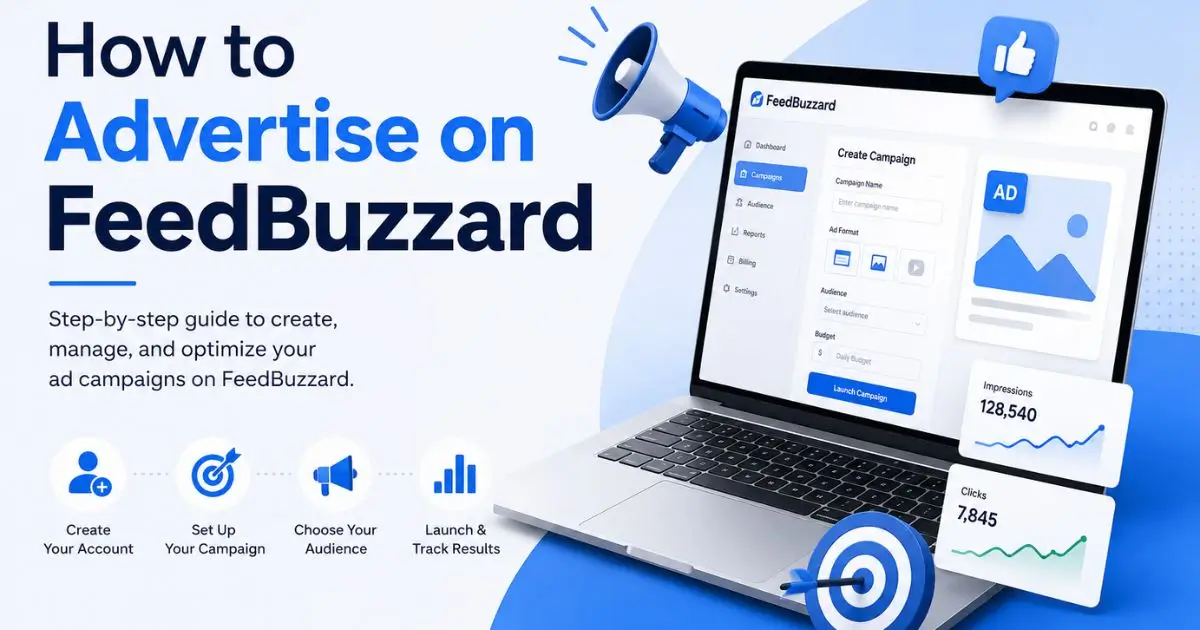
Here’s the basic flow:
- You create an advertiser account on FeedBuzzard
- You submit your ad content — usually a headline, image, and destination URL
- You set your targeting options (location, device, topic category)
- FeedBuzzard distributes your ad across its publisher network
- You pay per click (CPC model) or per thousand impressions (CPM model), depending on your campaign type
- You track performance through the platform dashboard
The ad units appear inside content feeds, making them feel less intrusive than a standard popup or sidebar banner. Readers see your promoted content as a recommendation, which typically improves click-through rates compared to display formats.
Setting Up Your First Campaign on FeedBuzzard
Let’s walk through this practically.
Step 1: Create Your Account
Head to the FeedBuzzard website and sign up as an advertiser. You’ll need to provide basic business details and a payment method. Account approval is usually straightforward for legitimate software businesses.
Step 2: Define Your Campaign Goal
Before you spend a dollar, know what you’re trying to achieve. Options typically include:
- Traffic – Drive visitors to your website or landing page
- Lead generation – Push people toward a signup form or demo request
- Brand awareness – Get your software product seen by a larger audience
Most software companies starting with FeedBuzzard do well with traffic campaigns first. Build awareness, then retarget with higher-intent offers.
Step 3: Build Your Ad Creative
This is where most advertisers lose money — not on the platform, but on weak creative.
Your ad needs three strong elements:
- Headline: Clear, specific, and benefit-focused. Example: “Cut Project Management Time by 40% With This Tool” performs better than “Try Our Software Today.”
- Image: Use clean visuals that look like editorial content, not ads. A screenshot of your software UI or a professional workspace photo works well.
- Landing Page: Send people to something relevant. A helpful blog post, a product tour page, or a free trial signup — not your generic homepage.
Step 4: Set Targeting Parameters
FeedBuzzard allows targeting by:
- Geographic location – Focus on the US market first, then expand to UK and Canada if your product supports those markets
- Device type – Desktop vs. mobile depends on your product; SaaS tools often convert better on desktop
- Content categories – Match your ad to relevant topic areas like technology, business, or productivity
If you’re advertising a software product to US-based users, start with desktop targeting in tech and business categories. Narrow from there once you have data.
Step 5: Set Your Budget
Start small. A $20–$50 daily budget for the first two weeks gives you enough data to see what’s working without large exposure. Scale only after you see a cost-per-click that fits your economics.
FeedBuzzard vs. Other Native Ad Platforms
| Platform | Best For | Avg CPC | Targeting Depth | Ease of Use |
|---|---|---|---|---|
| FeedBuzzard | Content-driven campaigns | Low–Mid | Moderate | Beginner-friendly |
| Taboola | Large-scale brand traffic | Mid | High | Moderate |
| Outbrain | Premium publisher reach | Mid–High | High | Moderate |
| RevContent | Budget-conscious advertisers | Low | Moderate | Moderate |
FeedBuzzard sits well for software businesses that want a lower-cost entry point into native advertising without the higher minimum budgets that Taboola or Outbrain often require.
What Works Well When You Advertise on FeedBuzzard
Based on how native advertising performs across platforms, here’s what consistently drives results for software brands:
Lead with value, not the product. Link to a useful article, a free tool, or a helpful resource first. Let the content do the selling. People who arrived through a helpful piece are far more likely to explore your product than someone who landed on a hard-sell page.
Use specific headlines. Vague headlines die fast in native feeds. Specific ones grab attention. “How Small Accounting Teams Use This Software to Save 5 Hours Per Week” beats “Accounting Software for Small Business” every time.
Test multiple creatives. Don’t run one ad and wait. Run three or four versions of your headline and image combination. Let the data pick the winner, then cut the rest.
Track beyond clicks. Clicks don’t pay your bills — conversions do. Make sure you have proper tracking set up (Google Analytics or your preferred tool) so you can see which ads lead to actual signups or purchases.
Honest Pros and Cons of FeedBuzzard Advertising
No platform is perfect. Here’s a straightforward breakdown:
Pros:
- Lower entry point compared to major networks
- Native format tends to get better engagement than display
- Good for building top-of-funnel awareness for software products
- Beginner-friendly interface
Cons:
- Smaller network reach compared to Taboola or Outbrain
- Traffic quality can vary — needs monitoring
- Not ideal for highly technical B2B software with a very narrow audience
- Requires good content to land well; weak landing pages will waste budget
For a US-based software startup testing native ads for the first time, FeedBuzzard offers a reasonable, lower-risk starting point. But go in with realistic expectations — no platform delivers overnight results.
A Real-World Example
A small US-based project management software company with a $500 monthly ad budget decided to advertise on FeedBuzzard rather than jump straight into Google Ads.
They created a simple article: “5 Signs Your Team Needs a Better Project Tracking Tool.” They linked the native ad to that article, which included a soft CTA at the bottom for a free trial.
In the first month, they drove over 1,200 visitors to the article at a low CPC. Around 8% clicked through to the trial page, and about 2% of those converted to free trial signups. Not explosive — but enough to prove the channel was worth scaling.
That’s what realistic FeedBuzzard success looks like for a software business: steady, measurable growth, not overnight viral traffic.
Frequently Asked Questions
What are the new software versions TCfTechMods released recently?
TCfTechMods regularly releases updates with bug fixes, performance improvements, new features, and security enhancements.
Is it safe to update to the latest TCfTechMods version?
Yes, if you download it from the official source. Always back up your data before updating.
How do I check which TCfTechMods version I’m using?
Open the software and go to Settings or About to view the installed version.
Why isn’t the latest version installing?
Common causes include incompatible devices, low storage, or outdated system requirements. Ensure your device meets the minimum requirements.
Do new versions improve performance?
Yes. Most updates enhance speed, stability, compatibility, and overall user experience.
About the Author