Introduction
Choosing the right stocks can feel overwhelming. With thousands of options and constant market changes, even experienced investors struggle to make confident decisions. That’s where artificial intelligence tools promise to help—by analyzing massive amounts of data faster than any human could.
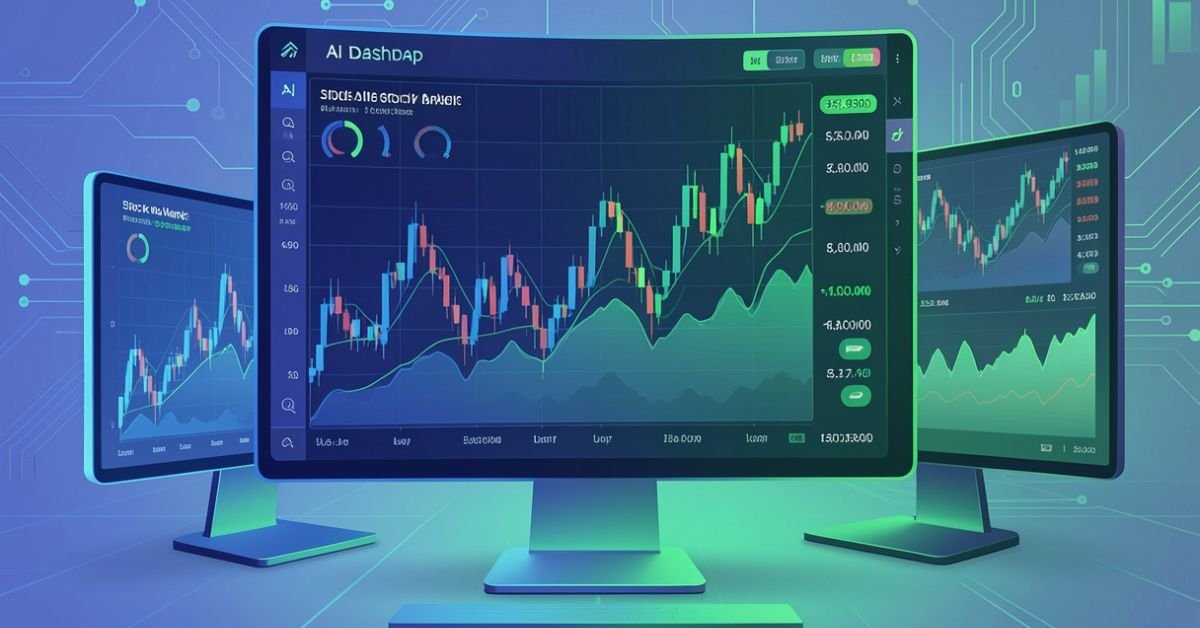
5starsstocks.com AI is an artificial intelligence-powered platform designed to help investors identify promising stock opportunities through automated analysis of market trends, financial data, and historical performance patterns. The tool aims to simplify stock research by providing AI-generated insights and recommendations.
More investors are turning to AI tools to gain an edge, but not all platforms deliver what they promise. Some offer generic advice, others overwhelm users with data, and many don’t explain how their recommendations actually work.
In this guide, you’ll learn exactly what 5starsstocks.com AI offers, how its technology works, what it does well, where it falls short, and whether it fits your investing approach.
Quick Summary
5starsstocks.com AI uses artificial intelligence to analyze stocks and generate investment recommendations. It processes market data, company financials, and trends to identify potential opportunities. While it can save research time and spot patterns humans might miss, it’s not a guaranteed profit system. Best used as one tool among several, not as your only decision-maker. Works for beginners seeking guidance and intermediate investors wanting faster research, but still requires your own judgment.
What Exactly Is 5StarsStocks.com AI?
At its core, this platform applies machine learning algorithms to stock market data. Instead of manually reading through earnings reports, comparing ratios, and tracking sector trends, the AI does this work automatically.
The system scans financial statements, price movements, trading volumes, news sentiment, and historical patterns. It then identifies stocks that match certain success criteria based on past performance data.
Think of it like having a research assistant that never sleeps. While you’re working or sleeping, the AI monitors thousands of stocks, looking for specific signals that suggest a stock might rise in value.
The platform presents its findings through ratings, typically using a star system (hence the name). Higher-rated stocks supposedly show stronger potential based on the AI’s analysis.
How the Technology Works Behind the Scenes
The AI uses several data sources:
- Market data – Real-time and historical prices, trading volumes, volatility measures
- Financial statements – Revenue growth, profit margins, debt levels, cash flow
- Technical indicators – Moving averages, momentum signals, support and resistance levels
- News and sentiment – Media coverage tone, social media discussions, analyst ratings
- Economic context – Interest rates, sector performance, market cycles
Machine learning models process this information to find correlations between data patterns and future stock performance. For example, the AI might notice that stocks with certain financial ratios and positive news sentiment in a particular sector tend to rise within 30 days.
The system continuously learns from new data, adjusting its models as market conditions change.
Key Features That Matter
Automated Stock Screening
Instead of manually filtering through thousands of stocks, the AI does this instantly. You can set parameters like market cap, sector, or risk level, and get a shortlist of matches.
A retail investor in Chicago might use this to find mid-cap technology stocks with strong revenue growth—a search that would take hours manually but seconds with AI.
Pattern Recognition
Humans are good at spotting obvious trends but often miss subtle patterns across multiple variables. AI excels at finding these hidden connections.
For instance, the system might identify that stocks with a specific combination of insider buying, improving margins, and sector momentum have historically performed well in similar market conditions.
Real-Time Updates
Markets change fast. The AI monitors positions continuously and can alert you when conditions shift, like when a highly-rated stock shows warning signs or a new opportunity emerges.
Risk Assessment
Beyond just picking stocks, the platform evaluates potential downside. It considers volatility, correlation with market movements, and historical drawdowns to estimate risk levels.
This helps you understand not just what to buy, but how much risk you’re taking on.
Who Actually Benefits from This Tool?
Beginner Investors
If you’re new to stocks, you need structure. The AI provides a starting point—specific recommendations with reasoning, rather than just throwing you into the deep end.
You still need to learn the basics, but the tool can help you see what experienced analysis looks like.
Time-Constrained Investors
Maybe you have a full-time job and can’t spend hours researching stocks each week. The AI handles the heavy lifting, giving you a curated list to review in minutes instead of hours.
A teacher in Toronto might check the platform once weekly to see new opportunities, rather than spending evenings reading financial statements.
Intermediate Traders
If you already know the basics but want an additional perspective, AI analysis can confirm or challenge your own research. It might catch something you missed or highlight risks you didn’t fully consider.
Not Ideal For
Advanced traders with complex strategies might find the tool too basic. If you’re already using sophisticated quantitative models or algorithmic trading, this platform probably won’t add much value.
Also, anyone expecting guaranteed returns or a “get rich quick” solution will be disappointed. No AI eliminates market risk.
Honest Strengths and Limitations
What It Does Well
- Speed – Analyzes hundreds of stocks in the time it takes you to research one
- Consistency – Doesn’t get emotional or tired; applies the same rigorous criteria every time
- Pattern detection – Spots complex relationships across multiple data points that humans typically miss
- Coverage – Monitors far more stocks than any individual could track
Where It Falls Short
- No guaranteed accuracy – AI predictions are based on historical patterns, but markets don’t always repeat. Past performance doesn’t guarantee future results.
- Black box concerns – Some AI tools don’t fully explain their reasoning, making it hard to evaluate whether recommendations make sense.
- Market surprises – Unexpected events (regulatory changes, geopolitical shocks, management scandals) can upend even the best AI analysis.
- Overreliance risk – Using AI as your only research source means missing context and nuance that requires human judgment.
A realistic example: The AI might rate a stock highly based on strong financials and positive trends, but it can’t predict that the CEO will suddenly resign or that a competitor will launch a game-changing product.
How to Use It Effectively
Start with AI, Finish with Your Brain
Treat recommendations as starting points, not final answers. When the AI suggests a stock, do your own basic check:
- Does the business make sense to you?
- Do you understand how it makes money?
- Are there obvious risks the AI might have missed?
Combine with Other Research
Use traditional sources too—company earnings calls, industry reports, competitor analysis. The AI gives you speed; other sources give you depth.
Set Clear Rules for Yourself
Decide in advance how much weight you’ll give AI recommendations. Maybe you’ll only invest if both the AI and your own research agree. Or you’ll use AI for screening but make final decisions based on fundamental analysis.
This prevents you from blindly following suggestions you don’t understand.
Monitor and Learn
Track how AI recommendations perform over time. If they consistently underperform, adjust how you use them. If they work well in certain sectors but not others, narrow your focus.
Comparing AI Stock Tools
| Feature | 5StarsStocks.com AI | Traditional Research | Other AI Platforms |
|---|---|---|---|
| Speed | Very Fast | Slow | Very Fast |
| Coverage | Broad (thousands of stocks) | Limited | Varies |
| Depth | Moderate | Very Deep | Varies |
| Customization | Standard parameters | Fully customizable | Often highly customizable |
| Learning Curve | Easy | Steep | Moderate to steep |
| Cost | Subscription-based | Time-intensive (free) or analyst fees | Varies widely |
Real-World Context: AI in Investing Today
AI stock analysis isn’t new, but it’s becoming more accessible. Major hedge funds have used machine learning for years, but tools like this bring similar technology to regular investors.
According to financial research, AI-driven investment tools have grown significantly, with millions of users now relying on some form of algorithmic assistance. However, studies also show mixed results—some AI systems outperform indexes, others don’t.
The key difference between professional and retail AI tools often comes down to data quality, model sophistication, and continuous refinement by expert teams.
For a regular investor in California researching after work, the advantage isn’t about beating Wall Street—it’s about making better-informed decisions faster than you could alone.
Privacy and Security Considerations
When using any online financial tool, consider:
- Data protection – How is your investment information stored and used?
- Account security – Does the platform use encryption and two-factor authentication?
- Third-party sharing – Who else sees your data?
Read the privacy policy before linking any financial accounts or entering personal details.
Costs and Value Assessment
Most AI stock platforms charge monthly or annual subscriptions. Prices typically range from $20 to $200+ per month, depending on features.
Evaluate cost versus benefit honestly:
- How much time does it save you?
- Does it help you make better decisions?
- Are the recommendations actually useful?
If you’re investing small amounts, a $100 monthly fee might not make sense. But if you’re managing a larger portfolio and the AI helps you avoid even one bad investment, it could pay for itself quickly.
Many platforms offer free trials. Use these to test before committing.
Common Misconceptions
“AI guarantees profits” – No tool can do this. Markets are inherently uncertain.
“I don’t need to learn anything” – You still need basic financial literacy. AI is a helper, not a replacement for understanding.
“All AI tools are the same” – Quality varies dramatically. Some use sophisticated models; others are glorified screeners with AI branding.
“It knows the future” – AI predicts based on patterns, not certainty. It’s making educated guesses, not reading a crystal ball.
Conclusion
5starsstocks.com AI offers a practical way to enhance your stock research through automation and pattern recognition. It saves time, covers more ground than manual research, and can spot opportunities you might miss.
But it’s not magic. Markets remain unpredictable, and AI analysis has real limitations.
The investors who benefit most use it as one component of a broader strategy—combining AI insights with their own research, clear risk management, and realistic expectations.
If you’re willing to learn alongside the tool rather than blindly following it, and you understand that no system guarantees profits, it can be a valuable addition to your investing toolkit.
Try the platform if it offers a trial period. Test its recommendations against your own research. See if the insights actually help you make better decisions.
The goal isn’t to find a perfect system—it’s to build a process that works for you.
Frequently Asked Questions
Is 5starsstocks.com AI good for beginners?
Yes, beginners can use it for structured stock recommendations and automated analysis. However, you should still learn basic investing concepts like how stocks work and risk management. The AI helps most when you understand enough to evaluate its suggestions, not just follow blindly.
How accurate are the AI predictions?
Accuracy varies based on market conditions and data quality. Most AI tools don’t share verified track records, so exact accuracy is hard to confirm. The AI will be right sometimes and wrong other times—it improves your research speed but doesn’t guarantee profits or eliminate risk.
Can I use this for day trading?
Not really. The platform works better for longer-term investing (weeks to months) rather than day trading. Day trading needs real-time speed and minute-by-minute data that this tool doesn’t focus on. It’s designed for stock selection, not rapid daily trades.
Does it work during market crashes?
AI struggles during unusual market conditions because it relies on historical patterns. During events like the 2020 crash, AI can’t adapt fast enough. It might identify which stocks fall less, but it won’t help you avoid losses when entire markets drop sharply.
Do I need tech skills to use it?
No advanced skills needed. Basic computer use and internet access are enough. You don’t need programming knowledge. Understanding basic investing terms (like P/E ratio or market cap) helps you make better sense of the recommendations.
About the Author