Zenvekeypo4 Software Problem
There’s nothing more frustrating than running into a software problem you can’t identify. You’re working, everything seems normal and suddenly your system throws something unexpected at you. If you’ve come across the zenvekeypo4 software problem, you already know the feeling.
This issue has confused many users across different platforms. It doesn’t always give a clear explanation. Sometimes it shows up as a crash. Other times it silently breaks a feature in the background.
The zenvekeypo4 software problem refers to a specific software malfunction that disrupts normal application behavior typically caused by corrupted files, configuration conflicts, failed updates, or compatibility issues between system components. It can affect desktop applications, web-based tools, and background services, making it a broad but traceable issue.
This guide will explain exactly what causes this problem, where it appears, and how to fix it step by step. No jargon, no guesswork.
Quick Summary
The zenvekeypo4 software problem is a system-level software malfunction usually caused by file corruption, bad updates, or configuration errors. It’s fixable. Follow the troubleshooting steps below to resolve it quickly.
Why This Problem Matters
Ignoring software problems never makes them go away. In fact, most issues like this one get worse over time.
A small glitch today can turn into data loss tomorrow. If the zenvekeypo4 issue is tied to a corrupted process or broken dependency, it can spread to other parts of your system. It can slow down performance, crash applications unexpectedly, or block important workflows.
Whether you’re a developer, a freelancer using design tools, or someone managing business software, understanding this problem saves you time and headaches.
Where the Zenvekeypo4 Software Problem Typically Appears
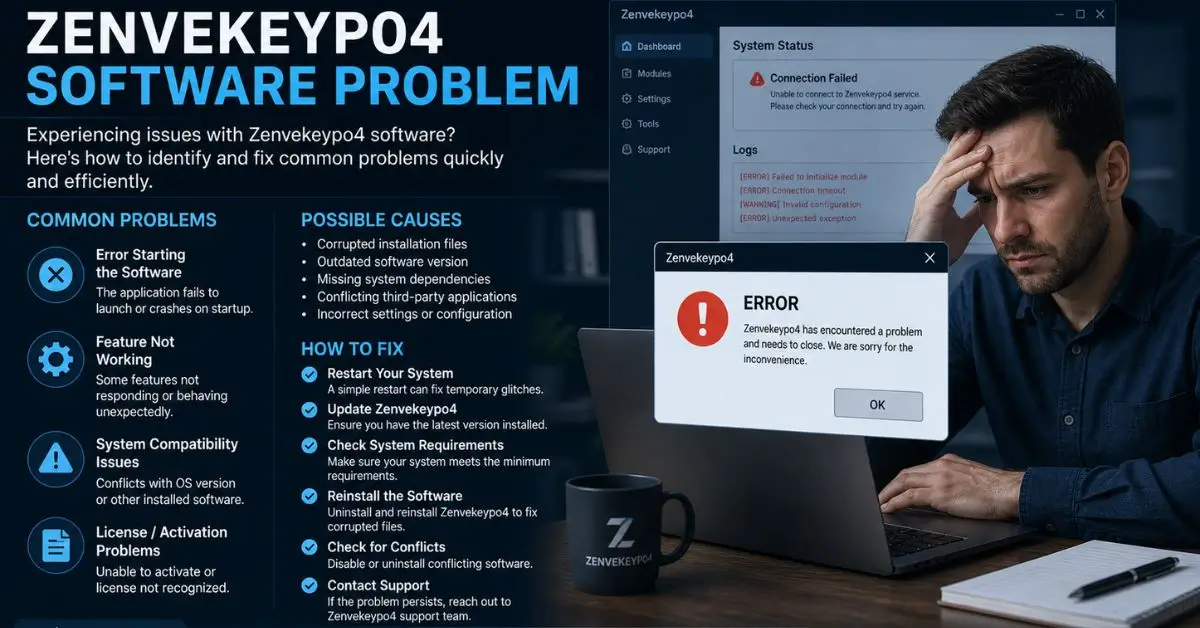
This problem doesn’t always show up the same way. Here are the most common places users encounter it:
1. During Application Launch
The program tries to load, hits a broken component, and either crashes or freezes on the loading screen. This usually points to missing or corrupted files in the installation directory.
2. After a Software Update
Updates are supposed to fix things but sometimes they introduce new problems. If the update didn’t install completely, or if it conflicted with an existing configuration, the zenvekeypo4 issue can appear right after.
3. While Running Background Services
Some applications depend on background processes. If one of those processes fails silently, you may not notice the problem until the main application tries to use that service and gets no response.
4. During File Processing or Data Sync
If the software handles file imports, exports, or data syncing with cloud services, a broken connection or format mismatch can trigger this error during those operations.
Common Causes of the Zenvekeypo4 Software Problem
Let’s break down the root causes. Understanding why something breaks is the fastest path to fixing it.
Corrupted Installation Files
This is the number one cause. When software files get corrupted due to incomplete downloads, interrupted installations, or disk errors the program can’t function properly.
Example: A graphic designer in Austin, Texas downloads a large creative suite overnight. The download gets interrupted during a brief internet outage. The software installs but crashes on launch due to a missing core file. The error log shows the zenvekeypo4 reference.
Configuration File Conflicts
Software applications use configuration files to store settings things like preferences, paths, and connection strings. If two programs modify the same configuration file, or if a manual edit introduces a typo, the system can’t read the settings correctly.
This is especially common in development environments where multiple tools share system-level configurations.
Failed or Partial Software Updates
An update that stops halfway through can leave your software in a broken state. Some files get updated, others don’t and the mismatch causes unexpected behavior.
Always ensure your device stays powered and connected during updates. It sounds basic, but it prevents a lot of problems.
Dependency or Library Version Mismatch
Modern software depends on external libraries and frameworks. If one library updates but another stays on an older version, they may become incompatible. This conflict can surface as the zenvekeypo4 software problem in your error logs.
Operating System Compatibility Issues
Running software designed for one OS version on a different one can cause unpredictable behavior. This is common when users upgrade their operating system but don’t update their applications to match.
Insufficient System Resources
Sometimes the problem isn’t the software itself it’s your hardware. Low memory, full disk space, or an overloaded CPU can cause applications to malfunction and throw error codes that look like software bugs.
How to Fix the Zenvekeypo4 Software Problem – Step by Step
Follow these steps in order. Most users find the solution within the first four steps.
Step 1: Restart the Application and Your System
It sounds too simple, but it works more often than you’d expect. A fresh restart clears temporary memory, releases locked files, and resets background services.
Close the application completely don’t just minimize it. Then restart your computer before trying again.
Step 2: Check for Software Updates
Open the application and check for available updates. If the app won’t open, visit the official website and download the latest version manually.
Make sure the update completes fully before restarting the software.
Step 3: Repair or Reinstall the Software
Most applications offer a built-in repair option:
- Windows: Go to Settings → Apps → find the application → click Modify or Repair
- Mac: Re-download the .dmg file and reinstall over the existing version
If repair doesn’t work, do a clean uninstall first, then reinstall from scratch. This replaces any corrupted files with fresh copies.
Step 4: Review and Reset Configuration Files
If you’ve recently changed any settings manually, revert them. Look for configuration files like .config, .ini, .json, or .env files in the application directory.
Renaming the config file (instead of deleting it) forces the application to generate a new default configuration on the next launch. This is a safe way to test if the config file was the issue.
Step 5: Update Your Operating System
Make sure your OS is running the latest stable version. Outdated operating systems can lack security patches and compatibility updates that modern software needs.
- Windows: Settings → Update & Security → Check for updates
- Mac: System Settings → General → Software Update
Step 6: Free Up System Resources
Check your available disk space and memory:
- Close unnecessary programs running in the background
- Clear temporary files using built-in cleanup tools
- Make sure you have at least 10–15% free disk space
Low resources can cause software to fail in ways that look like bugs but are actually hardware limitations.
Step 7: Check Error Logs for Details
If the problem persists, dig into the error logs:
- Windows: Event Viewer → Application Logs
- Mac: Console app → system.log
- Linux:
/var/log/syslogor application-specific log folder
Look for entries around the time the error occurred. The log often reveals the specific file, service, or process that caused the failure.
Step 8: Contact Support or Community Forums
If none of the above works, reach out to the software’s official support team. Provide them with:
- Your operating system version
- The exact error message or code
- Steps you already tried
- Relevant log entries
Developer forums like Stack Overflow and GitHub Issues are also excellent resources for finding community-sourced fixes.
Quick Reference: Problem Sources and Solutions
| Problem Source | Likely Cause | Recommended Fix |
|---|---|---|
| App crashes on launch | Corrupted installation files | Clean reinstall |
| Error after update | Partial or failed update | Re-download and reinstall update |
| Slow performance + errors | Low system resources | Free disk space, close background apps |
| Config-related failure | Manual settings change or conflict | Reset configuration file |
| OS mismatch error | Outdated operating system | Update OS to latest stable version |
How to Prevent This Problem From Coming Back
Fixing the problem once is great. Preventing it from returning is even better.
- Enable automatic updates: for both your software and operating system
- Back up configuration files: before making manual changes
- Monitor disk space: regularly set alerts if possible
- Use a reliable internet connection: when downloading or updating software
- Keep your drivers updated: especially graphics and network drivers
- Document changes: you make to system settings so you can reverse them easily
Conclusion
Software problems like this one feel overwhelming at first but they’re almost always fixable when you approach them step by step. Start with the basics: restart, update, repair. Move to deeper fixes only when needed. And always check your logs they tell you exactly where to look.
If this guide helped you solve the zenvekeypo4 software problem, share it with someone who might be stuck on the same issue. Sometimes the right article at the right time saves hours of frustration.
Explore more troubleshooting guides and software tips on WriteXBlog – Write. Share. Grow.
Frequently Asked Questions
What is the zenvekeypo4 software problem?
It’s a software malfunction caused by corrupted files, failed updates, or configuration conflicts. It disrupts normal application behavior and can show up as crashes, freezes, or broken features. Checking logs and reinstalling the software usually resolves it.
Is the zenvekeypo4 problem dangerous to my computer?
No, it’s not dangerous. It’s a software-level issue, not a virus or malware threat. However, ignoring it may lead to data loss or worsening performance over time. Fixing it promptly keeps your system stable.
Can this problem affect any software?
Yes. Since the root causes corrupted files, bad updates, config conflicts are common across all software types, this issue can appear in almost any application. The troubleshooting steps remain similar regardless of the specific program.
How do I know if my config file is causing the issue?
Rename your current config file and restart the application. If it launches normally with a fresh default config, the old file was the problem. You can then compare both files to find the specific setting that caused the conflict.
Should I reinstall or repair the software first?
Always try repair first. It’s faster and preserves your settings. If repair doesn’t work, then do a clean uninstall followed by a fresh installation. This replaces all files and gives you a clean starting point.
About the Author