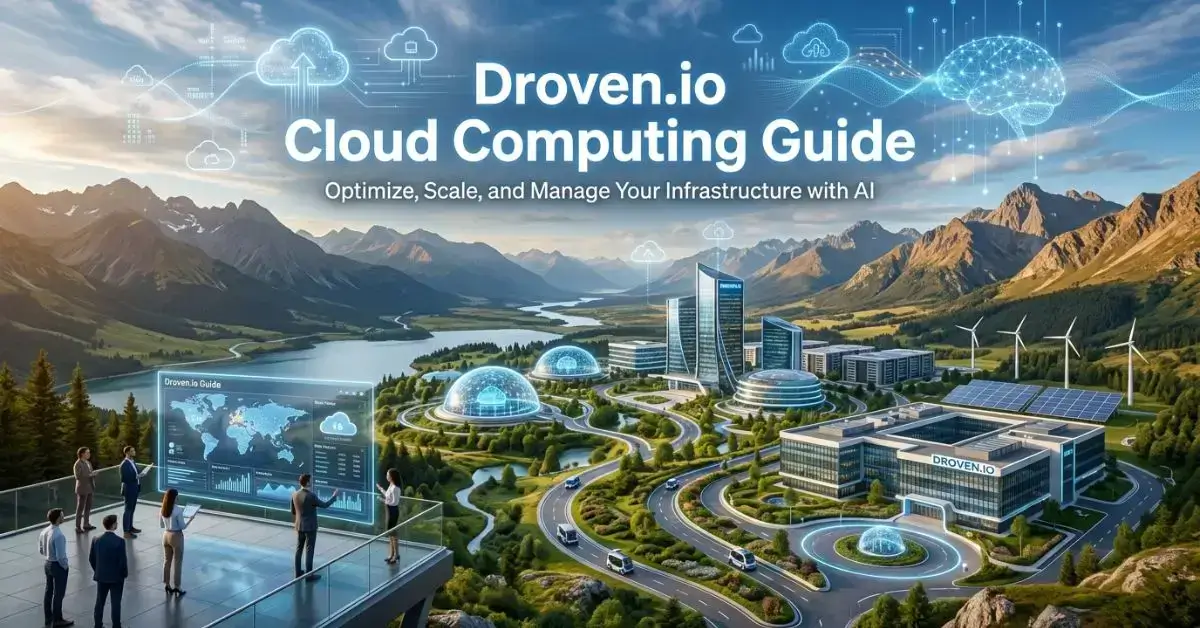
Droven.io Cloud Computing Guide
Cloud computing is no longer a niche technical subject reserved for enterprise IT teams. It is the infrastructure behind nearly every AI tool, SaaS platform, and digital service that businesses and individuals use daily. Understanding how it works, and more importantly how AI tools connect to and depend on cloud infrastructure, has become genuinely useful knowledge for a much broader range of people than it used to be.
The challenge is that most cloud computing resources are either too basic to be useful beyond a first introduction or too technical to be accessible without significant prior knowledge. The gap between beginner content and professional documentation is where most learners get stuck.
The droven.io cloud computing guide is designed to bridge that gap. This article explains what the guide covers, how it connects cloud computing concepts to AI tool usage, who benefits most from it, and how to approach it effectively for maximum learning value.
The droven.io cloud computing guide is a structured educational resource provided through the droven.io platform that explains cloud computing concepts, infrastructure types, and AI tool integration in an accessible, practical format. It is designed to help users understand how cloud services power modern AI applications, how to evaluate cloud platforms for specific needs, and how to make informed decisions about cloud-based AI tool deployment and usage.
Quick Summary
The droven.io cloud computing guide covers cloud infrastructure fundamentals, AI tool integration, service models, and practical cloud decision-making. It is most useful for business professionals, developers, and AI tool users who need to understand cloud computing in the context of modern AI applications. This guide covers what to expect, how to use it, and what it realistically delivers.
Why Cloud Computing Knowledge Matters for AI Tool Users
Five years ago, understanding cloud computing was primarily relevant to IT professionals and software developers. Today, the situation is different.
Every AI tool you use, whether it is a writing assistant, an image generator, a data analysis platform, or a business automation tool, runs on cloud infrastructure. The performance you experience, the pricing model you pay for, the data privacy implications of using the tool, and the scalability of what the tool can do all connect directly to the cloud architecture underneath it.
A marketing professional in Chicago who uses five AI tools in their daily workflow is effectively a cloud computing consumer whether they realize it or not. Understanding the basics of how cloud services work, what the difference between shared and dedicated infrastructure means for their data, and how usage-based pricing models translate to monthly costs gives that professional genuine decision-making capability that pure tool-level knowledge does not.
This is precisely the audience the droven.io cloud computing guide is built for: people who use AI tools professionally and want enough cloud knowledge to make better decisions without needing to become cloud engineers.
What the Droven.io Cloud Computing Guide Covers
The guide addresses cloud computing across several interconnected areas. Here is what you can expect across its main content sections.
Cloud Computing Fundamentals
Before connecting cloud computing to AI tools, the guide establishes a clear foundation of core concepts. This includes what cloud computing actually means in practical terms, how it differs from traditional on-premises infrastructure, and why the shift to cloud has been so significant for technology and business.
Key concepts covered at this level include the distinction between public, private, and hybrid cloud environments, what virtualization means and why it matters, and how cloud providers manage resources across global infrastructure networks. These fundamentals are explained in plain language rather than technical jargon, making them accessible to non-technical readers.
Cloud Service Models: IaaS, PaaS, and SaaS
One of the most practically useful sections of the guide covers the three main cloud service models that define how cloud services are delivered and consumed.
Infrastructure as a Service provides raw computing resources, servers, storage, and networking, that users configure and manage themselves. Platform as a Service adds a layer on top that handles the underlying infrastructure while giving developers a platform to build applications. Software as a Service delivers complete applications directly to users with no infrastructure management required.
Understanding this distinction matters for AI tool users because it clarifies what they are responsible for and what the provider handles. Most AI tools operate at the SaaS level, which means the provider manages everything below the application layer. Understanding this helps users ask better questions about security, data handling, and service reliability.
AI Tool Integration With Cloud Infrastructure
This is where the droven.io approach becomes particularly valuable for its intended audience. Rather than treating cloud computing and AI tools as separate subjects, the guide explains how they connect and why those connections matter.
AI models require significant computational resources for both training and inference. The cloud infrastructure that powers AI tools determines how quickly they respond, how they scale under heavy usage, and how much they cost to run. Understanding this relationship helps users interpret AI tool performance characteristics, pricing models, and the technical limitations that occasionally affect these tools.
Cloud Security and Data Privacy
For business users of AI tools, data security and privacy are among the most important considerations. The guide covers how cloud providers implement security at the infrastructure level, what encryption means in a cloud context, and how data sovereignty requirements affect decisions about which cloud regions to use.
This section is particularly relevant for users in regulated industries or those handling sensitive customer data. Understanding the basics of cloud security helps users ask the right questions when evaluating AI tools rather than accepting vendor claims without sufficient scrutiny.
Cost Management and Pricing Models
Cloud computing pricing is complex and usage-based billing can produce unexpected costs without proper understanding. The guide covers the main pricing models used by cloud providers, including on-demand pricing, reserved instances, and spot pricing, and explains how these translate to the pricing structures of AI tools built on top of cloud infrastructure.
For business users managing AI tool budgets, this knowledge helps predict costs more accurately and identify opportunities to optimize spending without sacrificing capability.
Scalability and Performance Concepts
Cloud computing’s defining advantage over traditional infrastructure is scalability. The guide explains what horizontal and vertical scaling mean, how auto-scaling works in cloud environments, and why these capabilities matter for AI tools that experience variable demand.
A content team using an AI writing tool during a campaign launch period needs that tool to handle significantly higher usage than normal without performance degradation. Understanding how cloud scalability enables this helps users set appropriate expectations and choose tools that are architected to handle their actual usage patterns.
Who Benefits Most From This Guide
Business Professionals Using AI Tools
The primary audience is professionals who use AI tools in their work and want enough cloud knowledge to make informed decisions about tool selection, data handling, and cost management. This audience does not need to become cloud engineers. They need to understand cloud concepts well enough to evaluate AI tools more critically and confidently.
Developers Building AI-Integrated Applications
Developers working with AI APIs and building applications that integrate AI capabilities need a solid understanding of cloud infrastructure to architect their applications effectively. The guide provides the foundational context that helps developers make better decisions about which cloud services to use and how to structure their deployments.
IT Decision-Makers Evaluating AI Tools
IT professionals responsible for evaluating and approving AI tool adoption within organizations benefit from the guide’s coverage of security, compliance, and infrastructure considerations. Understanding the cloud architecture underlying AI tools is essential for proper security and risk assessment.
Students and Career Changers
People building knowledge in cloud computing and AI as part of a career development path use the guide to establish foundational understanding before pursuing more specialized certifications or deeper technical training.
How to Use the Guide Effectively
Connect concepts to tools you already use
The most effective way to learn cloud computing concepts is to connect them immediately to AI tools and services you already use. When the guide explains what an API gateway does, think about how you call AI APIs in your own workflow. When it explains regional availability, think about where your most-used AI tools are hosted and what that means for latency and data handling.
Work through sections in order for foundational understanding
The guide is structured to build on itself. Skipping to specific sections works for reference purposes but produces stronger understanding when sections are worked through sequentially, particularly if cloud computing is a new subject for you.
Apply learning to real decisions
Use what you learn to evaluate a specific AI tool or cloud service decision you are currently facing. Applying new knowledge to a real situation cements understanding more effectively than abstract study. After finishing the section on security and compliance, apply that framework to an AI tool you are considering adopting.
Supplement with hands-on exploration
Reading about cloud computing produces significantly better results when combined with hands-on exploration. Most major cloud providers offer free tiers that allow you to experiment with services at no cost. AWS Free Tier, Google Cloud Free Tier, and Azure Free Account all provide enough access to explore the concepts the guide covers in a real environment.
What the Guide Does and Does Not Cover
| Area | Covered | Not Covered |
|---|---|---|
| Cloud fundamentals and concepts | Yes | Deep networking architecture |
| AI tool and cloud integration | Yes | Specific model training processes |
| Cloud service models (IaaS/PaaS/SaaS) | Yes | Advanced DevOps practices |
| Security and data privacy basics | Yes | Compliance certification specifics |
| Cost management fundamentals | Yes | Enterprise procurement strategies |
| Scalability concepts | Yes | Custom infrastructure optimization |
The guide is a practical foundation resource, not a comprehensive technical reference. It is designed to give users enough knowledge to make better decisions and ask better questions, not to replace professional cloud architecture training.
Conclusion
The droven.io cloud computing guide fills a genuine gap for the growing number of professionals who use AI tools daily but lack the cloud computing context to evaluate, manage, and optimize those tools effectively.
Cloud knowledge that connects directly to how AI tools work is more immediately useful than abstract cloud theory. The guide delivers that connection consistently, making it a practical resource for anyone whose work involves AI tools and who wants to engage with them more knowledgeably.
Use it as a foundation, apply what you learn to real decisions, and supplement with hands-on exploration of cloud platforms where possible. That combination produces understanding that outlasts any single reading.
If this guide was helpful, explore our related articles on how to evaluate AI tools for business use and understanding cloud pricing models for AI applications. Both give you the practical next steps for applying cloud knowledge to better AI tool decisions.
Frequently Asked Questions
What is the droven.io cloud computing guide?
It is a structured educational resource explaining cloud computing concepts, AI tool integration, and cloud service models in plain language, designed for professionals and developers who want practical cloud knowledge without deep technical training.
Who should use it?
Business professionals using AI tools, developers building AI applications, IT decision-makers, and students building cloud knowledge. It is especially useful for those who need to understand how cloud infrastructure affects AI tool performance and cost.
Does it cover AI-specific cloud topics?
Yes. It connects cloud concepts directly to AI tool usage, including how AI models consume cloud resources and how cloud architecture affects performance, pricing, and tool selection for business applications.
Is it suitable for beginners?
Yes. It starts with foundational concepts in plain language with no prior technical knowledge assumed. Those with some tech familiarity will move through the basics quickly and focus more on the applied AI content.
How does cloud computing relate to AI tool costs?
AI tool pricing reflects underlying cloud infrastructure costs including compute, storage, and networking. Understanding cloud pricing models helps predict AI tool costs and evaluate whether a pricing structure fits your usage needs.
About the Author