
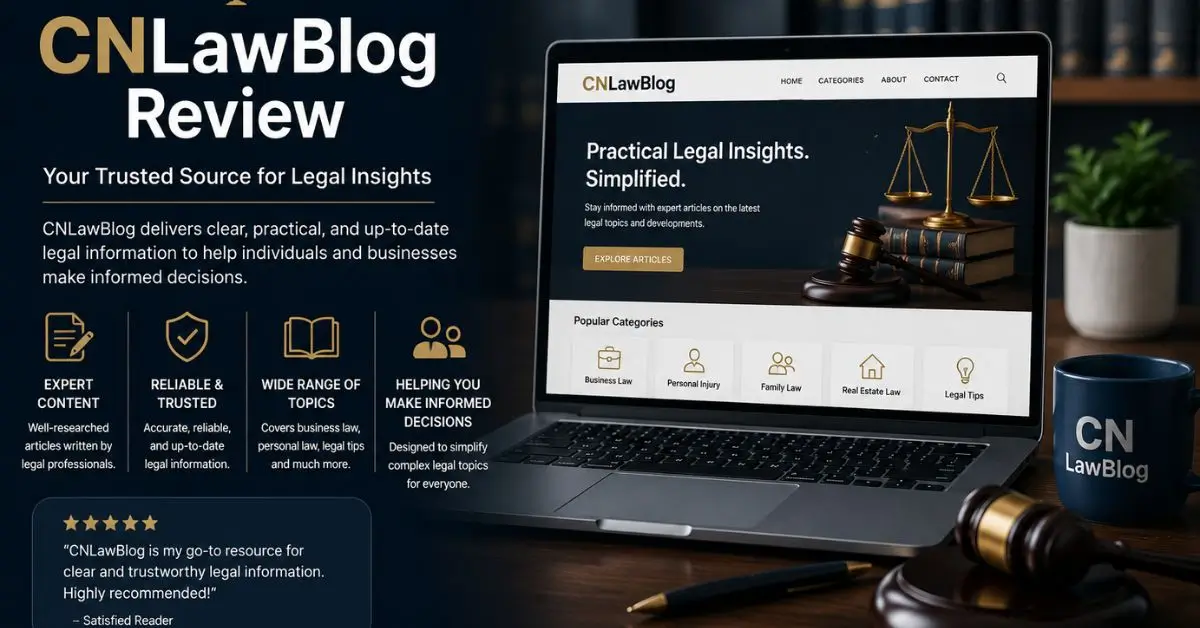
CNLawBlog Review: What It Is, What It Covers, and Is It Worth Your Time?
Finding reliable legal content online is harder than it should be. Most legal blogs either write in dense, technical language that only lawyers can follow or they oversimplify things so much that the information becomes almost useless.
CNLawBlog sits in an interesting middle ground. It has built a following among readers who want legal insight without needing a law degree to understand it. But is it actually useful? Is the content accurate, well-researched, and trustworthy enough to rely on?
This review gives you an honest answer. You will learn what CNLawBlog is, what topics it covers, who it is best suited for, and where it genuinely delivers along with where it falls short.
CNLawBlog is an online legal content platform that publishes articles, analysis, and commentary covering a range of legal topics with a particular focus on areas where law intersects with technology, business, and everyday life. It is designed to make legal information more accessible to general readers, professionals, and researchers who need reliable guidance without the complexity of academic legal writing.
Quick Summary
CNLawBlog is a legal content platform covering law, technology, and business topics. It is best suited for professionals, students, and informed general readers who want accessible legal insight. The content is generally well-structured and readable, though readers should always verify critical legal points with a qualified attorney.
What Is CNLawBlog?
CNLawBlog is a digital publication focused on making legal topics understandable and relevant to a broad audience. Rather than publishing dry case summaries or academic legal theory, the platform takes a more practical approach explaining legal concepts in plain language and connecting them to real situations that readers actually face.
The blog covers a wide range of subjects. Legal technology, intellectual property, data privacy, contract law, and regulatory developments are among the most frequently discussed areas. It also touches on how changes in legislation affect businesses, startups, and individuals particularly in the US market.
What sets it apart from many legal blogs is the tone. Articles read more like informed commentary than formal legal documents. That makes the content approachable for non-lawyers while still being substantive enough to be useful for professionals looking for a quick, reliable overview of a topic.
What Topics Does CNLawBlog Cover?
The platform covers several core areas consistently. Here is a closer look at what you can expect to find.
Legal Technology
This is one of the strongest areas of the blog. Articles covering how technology is reshaping the legal industry from AI-assisted legal research to contract automation and e-discovery tools are well-researched and regularly updated.
For anyone working in legal tech, practicing law, or building products that touch the legal space, this section provides genuinely useful context. The writing stays current with industry developments, which matters in a field that moves quickly.
Data Privacy and Cybersecurity Law
With regulations like GDPR in Europe and CCPA in California continuing to evolve, data privacy law is one of the most in-demand areas of legal content right now. CNLawBlog covers these topics clearly explaining what new regulations mean in practice, how businesses should respond, and what individuals need to know about their rights.
This is particularly valuable for US-based startups and small businesses that need to understand compliance obligations without hiring a full-time legal team.
Intellectual Property
Patent law, copyright, trademark disputes, and the evolving landscape of digital IP are covered regularly. The content here tends to be practical focused on what creators, businesses, and developers need to understand rather than deep legal theory.
Business and Contract Law
Contracts, business formation, employment law basics, and regulatory compliance all feature on the blog. These topics are covered in a way that is useful for entrepreneurs, small business owners, and professionals who deal with legal documents regularly but are not lawyers themselves.
Commentary on Legal Developments
Beyond topic-specific guides, the blog also publishes commentary on significant legal cases, regulatory changes, and emerging legal debates. This gives readers a broader picture of how the law is evolving not just what the current rules are.
Who Is CNLawBlog Best Suited For?
Not every legal blog is right for every reader. Based on the content style and depth, here is an honest assessment of who gets the most value from this platform.
Legal professionals: Lawyers and paralegals looking for quick, readable overviews of topics outside their primary practice area will find the blog useful as a starting point. It is not a substitute for official case law or legal databases, but it provides good context quickly.
Technology professionals: Developers, product managers, and startup founders who regularly encounter legal questions around IP, data privacy, and contracts will find the intersection of law and technology coverage particularly relevant.
Students and researchers: Law students and academic researchers can use the blog to get accessible introductions to complex topics before going deeper into primary sources. The writing style makes dense subjects easier to approach.
General readers: Anyone who wants to understand their legal rights, follow significant legal news, or get a clearer picture of how laws affect daily life will find the content accessible and informative.
Who it is not for: Anyone looking for formal legal advice or jurisdiction-specific guidance should not rely solely on this or any blog. A qualified attorney remains essential for actual legal decisions.
Honest Assessment – Strengths and Weaknesses
| Area | Strengths | Weaknesses |
|---|---|---|
| Writing Quality | Clear, readable, well-structured | Occasionally lacks deep technical detail |
| Topic Coverage | Broad range across law and technology | Some niche areas covered less frequently |
| Accuracy | Generally reliable and well-researched | Always worth verifying with primary sources |
| Update Frequency | Covers current developments | Posting consistency can vary |
| Accessibility | Easy for non-lawyers to follow | May feel too basic for senior legal professionals |
| Practical Value | Strong for professionals and students | Not a substitute for legal advice |
This is an honest picture. CNLawBlog does more things well than it does poorly but like any content platform, it has limits that readers should be aware of.
How Does It Compare to Other Legal Blogs?
There are several well-known legal content platforms in the US Above the Law, Jurist, Law360, and SCOTUSblog, among others. Each serves a slightly different audience.
Above the Law leans heavily toward legal industry news and law firm culture. SCOTUSblog is highly specialized, focusing almost exclusively on Supreme Court coverage. Law360 is more of a subscription-based professional news service than a blog.
CNLawBlog occupies a different space broader in topic range than SCOTUSblog, more accessible than Law360, and more substantive than many general legal advice sites. For readers who want practical legal insight across multiple areas without a paywall or heavy academic tone, it fills a genuine gap.
Practical Tips for Getting the Most Out of CNLawBlog
If you decide to use the platform regularly, a few habits will help you get more value from it.
Use it as a starting point, not an endpoint. The blog is excellent for getting oriented on a topic quickly. But for anything with real stakes a contract dispute, a compliance question, a business decision always go deeper into primary sources or consult a professional.
Follow topic categories that match your work. Rather than browsing randomly, identify the two or three topic areas most relevant to your role and focus there. The legal tech and data privacy sections are particularly strong for technology professionals.
Cross-reference significant claims. For any article covering a specific regulation or legal ruling, verify the details against official government sources or legal databases. Good blogs get things right most of the time but not always.
Use it to stay current. The commentary and analysis pieces are especially useful for tracking how the law is evolving in real time particularly around technology, privacy, and business regulation.
Conclusion
CNLawBlog delivers what it sets out to do. It makes legal content readable, relevant, and accessible particularly for readers navigating the intersection of law, technology, and business.
It is not a replacement for a lawyer, a legal database, or formal legal research. But it is a genuinely useful resource for staying informed, getting oriented on unfamiliar legal topics, and following how the law is evolving in areas that matter to modern professionals.
If you work in technology, run a business, or simply want to understand the legal landscape better, it is worth adding to your regular reading list.
Frequently Asked Questions
What is CNLawBlog?
An online legal content platform covering legal technology, data privacy, IP, and business regulation written for professionals, students, and general readers who want clear legal insight without complex language.
Is it reliable?
Generally well-researched and useful for topic overviews. Not a substitute for professional legal advice always verify important points with a qualified attorney or official source.
Who should read it?
Legal professionals, tech workers, law students, and anyone following legal developments. Less suited for readers needing highly specialized or jurisdiction-specific legal guidance.
How does it compare to other legal blogs?
Broader than SCOTUSblog, more accessible than Law360 a practical middle ground. More substantive than general advice sites but not a replacement for professional legal databases.
Is it free?
Yes, generally accessible without a subscription making it practical for students, early-career professionals, and small business owners who need legal context without premium costs.
About the Author